





What Are the Most Common Upstream Bioprocessing Challenges and Solutions?
Upstream bioprocessing is the foundation of successful biopharmaceutical manufacturing. From cell line development to fermentation and cell culture expansion, every upstream step directly impacts yield, product quality, and downstream efficiency. However, manufacturers consistently face technical, operational, and regulatory challenges that slow production and increase costs.
This blog breaks down the most common upstream bioprocessing challenges and practical solutions used by modern bioprocess facilities, with a strong focus on efficiency, scalability, and compliance.
1. Cell Line Stability and Consistent Cell Growth
One of the biggest upstream bioprocessing challenges is maintaining stable cell lines and consistent cell growth across batches. Variability in cell behavior can result in reduced productivity, inconsistent protein expression, and batch failures.
Common issues
Genetic drift during long culture cycles
Poor cell viability and slow growth rates
Inconsistent media composition
Sensitivity to shear stress
Proven solutions
Use well characterized and stable cell lines
Optimize media formulations for specific cell types
Monitor growth parameters in real time
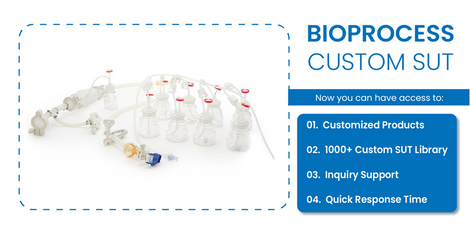
Reduce contamination risks using **single use upstream systems**
Modern facilities increasingly rely on single use technology to improve process control and reduce variability. Disposable assemblies minimize manual handling and support consistent cell culture performance.
Learn more about upstream workflows here:Upstream Bioprocessing Solutions
2. Contamination Risks in Upstream Processing
Contamination remains a critical concern in upstream bioprocessing. Even minor microbial contamination can lead to costly batch rejection and production delays.
Key contamination sources
Reusable equipment and poor cleaning validation
Open handling during media preparation
Transfer steps between vessels
Operator error
Effective contamination control strategies
Transition from stainless steel to **single use upstream bioprocessing systems**
Closed system fluid handling and sterile connectors
Pre sterilized tubing assemblies and bags
Standardized operating procedures and training
Single use components significantly reduce cross contamination risks while improving turnaround time between batches.

3. Scale Up Challenges from Lab to Manufacturing
Scaling upstream bioprocesses from research to commercial production is complex. Parameters optimized at small scale do not always translate directly to large volume bioreactors.
Scale up challenges include
Oxygen transfer limitations
Inconsistent mixing and nutrient distribution
Increased shear stress on cells
Process reproducibility issues
Practical scale up solutions
Use scalable upstream bioprocessing equipment
Maintain consistent process parameters across scales
Implement fed batch and perfusion strategies
Validate performance using pilot scale systems
Single use bioprocessing assemblies support flexible scale up while maintaining process consistency and reducing capital investment.
4. Process Monitoring and Control Limitations
Lack of real time monitoring can lead to delayed responses to process deviations, affecting yield and quality.
Common monitoring gaps
Limited visibility into critical process parameters
Manual sampling errors
Delayed data analysis
Solutions for better process control
Integrate sensors for pH dissolved oxygen and temperature
Implement process analytical technology
Use automated data collection systems
Reduce manual intervention with closed single use assemblies
Enhanced monitoring improves upstream bioprocess efficiency and supports data driven decision making.
5. Regulatory Compliance and Documentation Burden
Upstream bioprocessing must comply with strict regulatory guidelines, especially for GMP manufacturing. Documentation gaps or non compliant systems can delay approvals.
Compliance challenges
Validation of reusable equipment
Cleaning and sterilization documentation
Traceability of materials
Compliance focused solutions
Use pre validated **single use bioprocess components**
Maintain complete material traceability
Follow GMP aligned documentation practices
Partner with suppliers that meet global regulatory standards
Discover compliant upstream solutions from Foxxbioprocess
Why Foxxbioprocess for Upstream Bioprocessing Solutions
Foxxbioprocess supports upstream bioprocessing with high quality single use systems designed for flexibility, scalability, and compliance. Our solutions help manufacturers reduce risk, improve efficiency, and accelerate time to market.
Frequently Asked Questions
What is upstream bioprocessing?
Upstream bioprocessing includes cell culture development, media preparation, fermentation, and cell expansion steps before product purification.
What are the biggest challenges in upstream bioprocessing?
The most common challenges include contamination control, cell line instability, scale up complexity, process monitoring limitations, and regulatory compliance.
How does single use technology improve upstream bioprocessing?
Single use systems reduce contamination risks, improve batch consistency, eliminate cleaning validation, and support flexible production.
Why is upstream bioprocess optimization important?
Optimizing upstream processes improves yield, ensures product quality, and reduces manufacturing costs.
Are single use systems GMP compliant?
Yes. High quality single use bioprocess systems are designed to meet global GMP standards and regulatory expectations.