





Key Selection Criteria for Tubing Used in Bioprocess Applications
Key Selection Criteria for Tubing Used in Bioprocess Applications
Selecting the right tubing is one of the most critical steps in any bioprocess setup. Every stage from media preparation to fermentation to downstream purification depends on safe sterile and reliable fluid transfer. If the tubing fails or interacts with the product it can affect yield purity and overall process efficiency. For biopharmaceutical companies CMOs research labs and manufacturing units the demand for high performance bioprocess tubing continues to rise as single use systems become the preferred choice.
This detailed guide explains the key selection criteria for tubing used in bioprocess applications and helps decision makers choose the most compatible material design and configuration for their process. The goal is to make selection easier while improving process control compliance and product safety.
1. Understanding the Role of Tubing in Bioprocess Applications
Bioprocess tubing is responsible for sterile fluid transfer media and buffer movement sampling filling filtration operations and more. In many systems tubing works with connectors bags manifolds carboys and other single use assemblies. Any mismatch in material or performance can create contamination risk or disrupt flow dynamics.
Key functions of bioprocess tubing include
- Maintaining sterility across upstream and downstream workflows
- Supporting controlled transfer of media buffer and product fluid
- Preventing extractables and leachable from interfering with product quality
- Ensuring mechanical durability under pressure and repeated handling
- Keeping process conditions stable at different temperature ranges
- Enabling accurate flow control during filtration mixing and filling
Because tubing touches the product directly it must meet strict purity and performance standards. That makes the selection process extremely important for compliance and consistency.
2. Material Selection Based on Application Requirements

The first and most important selection factor is the tubing material. Each material has different chemical resistance temperature tolerance flow characteristics and biocompatibility levels. Understanding how each option performs helps determine the best fit for a specific bioprocess operation.
Common tubing materials used in bioprocessing
Silicone Tubing
- High flexibility
- Biocompatible and ideal for peristaltic pumps
- Suitable for autoclaving
- Good for aseptic transfer and high purity applications
TPE Tubing
- Excellent weldability and saleability
- Perfect for single use sterile connections
- Strong resistance to compression set
- Ideal for cell culture media and buffer transfer
PVC Tubing
- Transparent and easy to monitor flow
- Cost effective for non-critical bioprocess steps
- Good flexibility
Fluoropolymer Tubing
- Superior chemical resistance
- Low absorption and low extractables
- Suitable for aggressive solvents and downstream purification
How to choose the right material
- Match the chemical compatibility with media buffer or product
- Check suitability for sterile welding sealing or gamma irradiation
- Confirm compliance with biopharma standards such as USP Class VI
- Choose material based on pump requirements or pressure needs
- Consider long term stability under your operating temperatures
Material selection directly impacts sterility mechanical strength and regulatory compliance. Choosing the right tubing material ensures predictable performance.
3. Evaluating Tubing Performance and Mechanical Properties

Bioprocess tubing must withstand high flow rates pressure variations repeated pumping cycles and handling during assembly. Poor mechanical properties can lead to collapse kinks or rupture during production runs.
Important mechanical performance factors
Pressure rating
The tubing must be able to handle peak operating pressures especially in filtration or chromatography steps.
Flexibility and bend radius
Flexible tubing with low bend radius helps maintain smooth flow without collapsing during setup.
Pump durability
When used with peristaltic pumps tubing must handle repeated compression cycles without fatigue.
Temperature resistance
Many bioprocesses require cold storage warm transfer or steam sterilization. Tubing must remain stable across these ranges.
Kink resistance
Kinked tubing disrupts flow uniformity and causes air bubbles or pressure drops.
What engineers should evaluate
- How long the tubing must last in pump cycles
- Whether the process involves high pressure filtration
- If refrigeration or elevated temperature conditions are involved
- Whether tubing needs to be gamma stable for single use systems
Stronger mechanical properties mean greater reliability during long bioprocess cycles.
4. Sterility Compatibility and Regulatory Compliance
Maintaining sterility is critical in biologics manufacturing. Tubing must support sterile workflows while meeting regulatory and industry standards.
Sterility considerations
- Compatibility with gamma irradiation
- Resistance to autoclave if reusable
- Ability to support sterile welding and sealing
- Low extractables and leach able profile
- Compliance with USP Class VI and ISO standards
Why sterility compliance matters
- Prevents contamination that can compromise entire batches
- Supports consistent product quality
- Helps satisfy audit and regulatory requirements
- Ensures tubing integrates with closed loop single use assemblies
Before selecting tubing confirm all certifications and sterility data from reliable manufacturers.
5. System Integration and Process Fit
Bioprocess tubing is rarely used alone. It must integrate with connectors clamps manifolds bags pumps and other components. Ensuring compatibility across the system is essential for seamless performance.
Key factors for integration
- Matching tubing dimensions with fittings and connectors
- Using compatible weldable or sealable materials
- Ensuring pump compatibility for smooth fluid transfer
- Selecting tubing that supports your chosen flow rate and pressure
- Matching tubing length and diameter to system design
Questions to ask before final selection
- Does the tubing match the flow rate required for filtration or transfer
- Is the tubing easy to weld and seal with existing systems
- Does it integrate well with single use manifolds and assemblies
- Does the supplier offer custom configurations for project needs
An integrated approach ensures higher efficiency smoother scale up and fewer operational issues.
Choose High Quality Tubing and Custom Assemblies at Foxx Bioprocess
Selecting the right tubing plays a major role in process reliability product safety and overall efficiency. High purity bioprocess tubing must combine chemical resistance biocompatibility mechanical strength and sterility assurance in one solution.
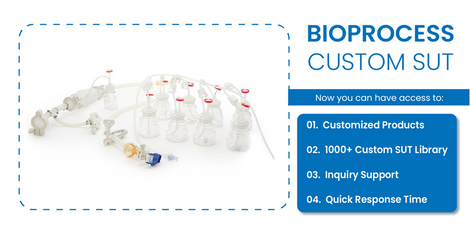
If you are looking for trusted single use tubing custom assemblies or complete bioprocess solutions explore the full range at Foxx Bioprocess. The brand offers high performance components designed for demanding upstream and downstream applications with strong focus on purity durability and compliance.
Visit Foxx bioprocess to find reliable tubing and assemblies that support consistent and contamination free bioprocessing.